The Time Machine Effect: Mastering Prospective Guided Imagery by Paige Calgary Psychologist
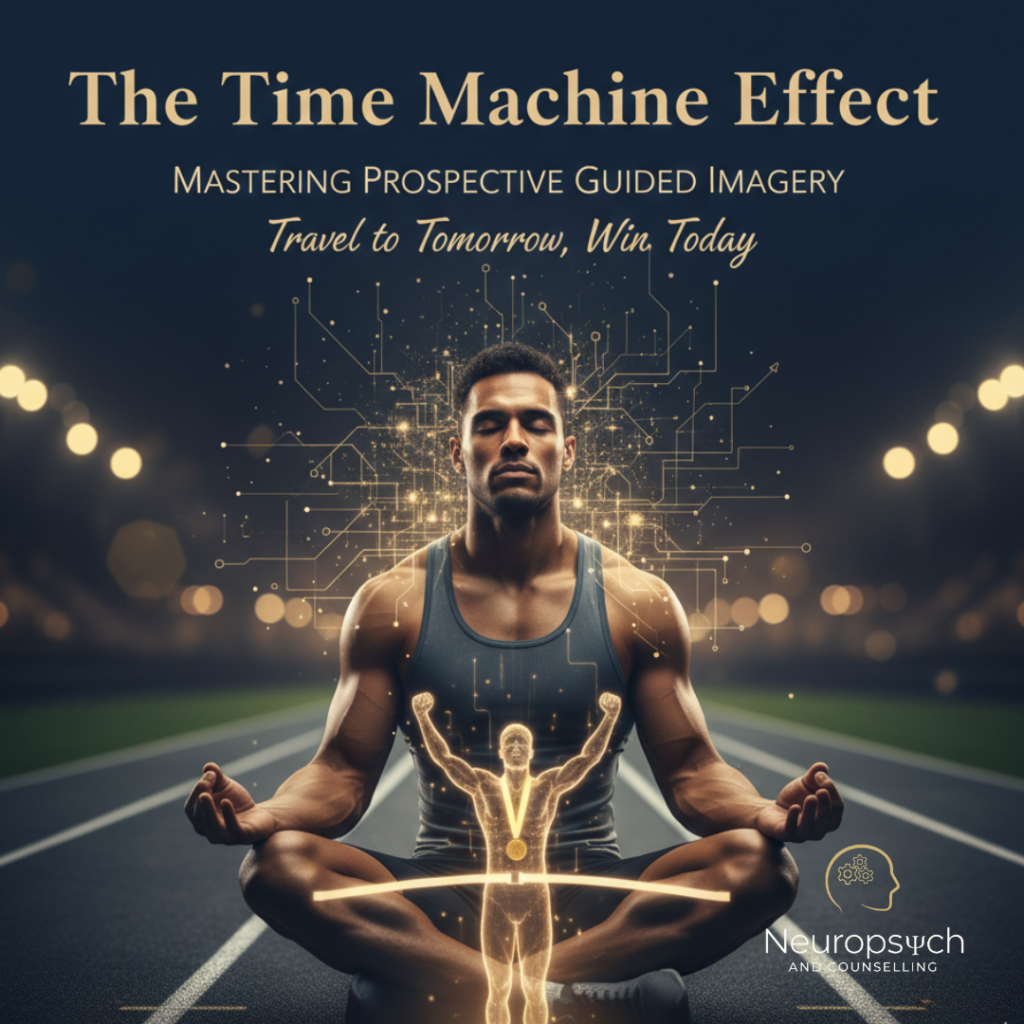
Travel to Tomorrow, Win Today: Mastering Prospective Guided Imagery for Peak Performance
Imagine having a mental time machine. Not to change the past, but to vividly experience the future, preparing your mind and body for success before it even happens. This isn’t science fiction; it’s the profound power of Prospective Guided Imagery (PGI), a technique that goes far beyond simple “visualization.”
While visualization often involves vaguely imagining a positive outcome, PGI is the intentional, multisensory rehearsal of a future event, meticulously crafted down to the smallest detail. It’s about engaging all your senses to “pre-live” the competition, the presentation, or the crucial moment you’re preparing for.
Think of it this way: When you use PGI, you aren’t just seeing yourself cross the finish line or nail that critical shot. You are priming your entire nervous system to recognize the path to that win. You’re experiencing the smell of the gym floor, the specific tension in your muscles, the roar of the crowd, the feel of the equipment in your hands, and, crucially, your planned, effective response to any potential challenge or adversity.
By engaging the prefrontal cortex—the part of your brain responsible for planning and decision-making—you effectively reduce the “novelty” of the high-stakes moment. When the actual event arrives, your brain feels like it’s already been there. It’s familiar territory. This familiarity translates directly into reduced anxiety, increased confidence, and a more automatic, fluid execution of your skills. Your body and mind have already rehearsed the script for success.
PGI isn’t about wishful thinking; it’s about strategic mental preparation. It’s about using your mind’s incredible capacity to simulate reality, ensuring that when the whistle blows, the curtain rises, or the pressure mounts, you’re not just ready—you’ve already won.
Ready to integrate this powerful technique? In our final post, we’ll bring it all together, showing you how to combine PGI with understanding your cognitive schemas to fundamentally rewire your performance identity.
Let’s get you started today: paige@neuropsychandcounselling.com